
Golf cart fleet management and pace of play
See every cart on the course live, catch slow groups while there is still time to do something about it, and keep carts off the turf you are paying to protect.
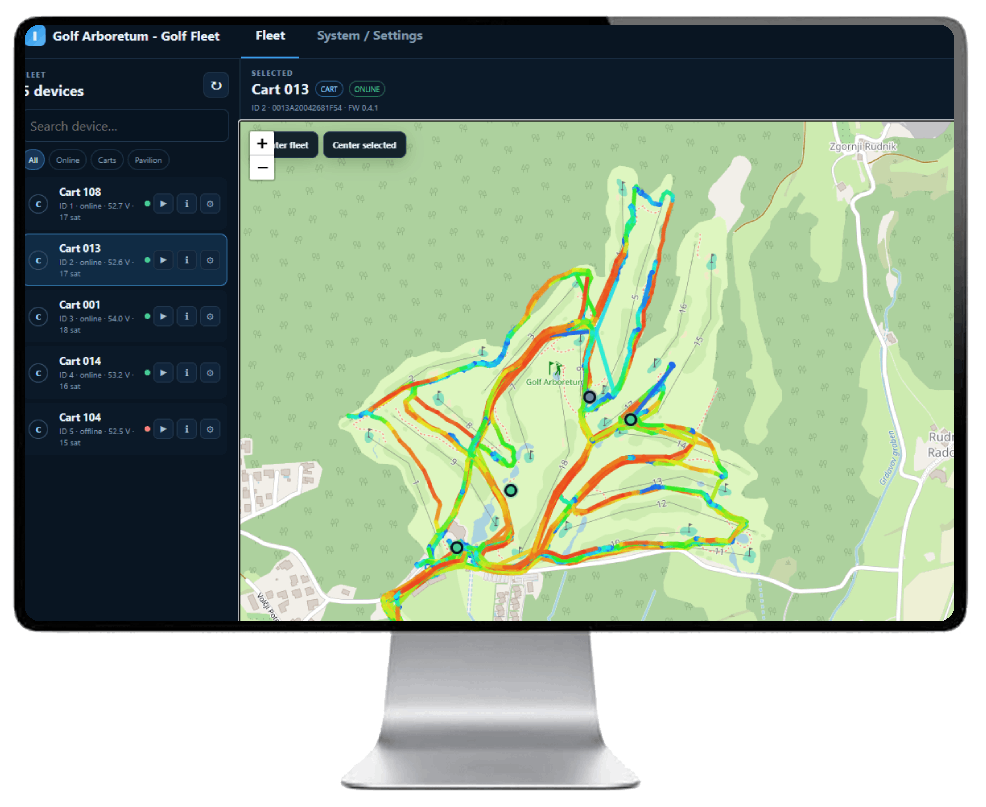
At the office and in a pocket
Five things, all from the same screen
Every cart, live
Position, battery, zone and who has it, for every cart and every flight. The player starts the cart from the app, so the record begins before the first tee.
Pace, before the complaint
Slow zones are flagged early, so a ranger goes to the group actually causing the backup rather than the one that looks slow from the clubhouse.
Turf protection
Geo-fencing and zoning rules keep carts off the areas you are trying to protect. Wet greens, new turf, a hole under repair. Auto/manual sending mp3's, stop the cart/reverse only, warnings,...
Safety
Knowing where every cart is matters most in a weather alert or an emergency, which is exactly when radios stop working well.
Use, over a season
How the fleet is actually used, so you buy the number of carts you need rather than the number you guessed.
It feeds everything else
Cart data goes straight into the tee sheet, pace management, crew tasks and player flow. Nothing here is a separate system.
Course-wide coverage, with or without a mobile provider
Cart tracking runs on a dedicated radio-frequency network by default, with cellular tablets as an option. The RF network means coverage across the whole course, including the corners where phones struggle, and no monthly airtime fees.
Position updates are fast and running costs are predictable, because there is no carrier in the middle. The hardware is minimal and it installs without digging anything up. API options to sync an existing tracking system, or to run tablets on the carts, is offered as an option.
- Dedicated RF network by default, cellular tablets as an option.
- No recurring carrier or airtime costs.
- Real-time position updates across large fleets.
- Plug-and-play installation on the carts you already have.
Front 9 cart shortage predicted
Demand at 14:15 is 7 carts against a supply of 3. Move 3 staged carts from the clubhouse and expedite one return from H18.
Cart 22 out of service 6 days
Controller board on back-order. Lost rental revenue to date: €348. A short-term rental unit would cover the Saturday peak.
Demonstration data from the GolfOS portal.
Why pace is a money problem, not a manners problem
These are other people’s numbers, and we say so. We have not published pace measurements of our own yet.
Sources: FAIRWAYiQ and Tagmarshal published material; USGA pace of play resources; National Golf Foundation. Collected in our July 2026 pace of play review. US data, not yet validated for European courses.
A good place to start
Carts and pace is where the difference shows up fastest. Take just this, run it for a season, and leave everything else where it is.